Caribbean
Wind Hazard Maps
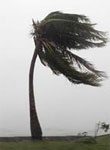
Building disaster-resilient hospitals and health facilities in hurricane-prone areas requires a sound knowledge of wind hazards. The original wind hazard maps for the Caribbean were almost 40 years old and the last were produced in 1985. Now, new state-of-the-art wind hazard maps for Caribbean islands and nearby coastal areas of Central and South America are available.
Why were new wind hazard maps prepared?
- The new maps include the Caribbean coastlines of South and Central
American countries. In several of these cases, there was no wind
hazard guidance for structural design purposes. The new maps will
fill that gap.
- A great deal of reliable data is now available since the maps
were last produced in 1985. There have also been new developments
in science and technology related to the long-term forecasting
of hurricane activity in the North Atlantic (including the Caribbean).
- Currently, regional building standards for wind resistance are
laid out in the 1985 Caribbean Uniform Building Code (CUBiC).
The higher-than-normal hurricane activity in the North Atlantic
over the past 13 years has led to the questioning of wind design
criteria incorporated in the present standards in the Caribbean.
A project funded by the Caribbean Development Bank (CDB) and executed
by the Caribbean Regional Organization for Standards and Quality
(CROSQ) is currently developing new regional standards to replace
the CUBiC. However, this project does not include new wind hazard
maps for the region. The new PAHO Caribbean Basin Wind Hazard
Maps are consistent with the CDB-CROSQ process in that both are
based on U.S.A. "International" codes that reference
the wind load provisions of the American Society of Civil Engineers.
- This, in turn, has led to uninformed and sometimes counterproductive
decisions on appropriate) wind speeds for some Caribbean projects
and in some Caribbean countries.
- The phenomenon of hurricane activity in the Caribbean is best
dealt with on a regional basis and not in a country-by-country
manner.
Click here for a web site with more information, including links to 20 wind hazard maps, presentations and the methodology used to develop these maps |
Tell us about your projects
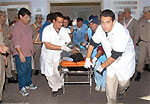
Many organizations worldwide are carrying out projects or activities designed to make health facilities, health systems and health workers safe from disasters. As part of the World Disaster Reduction Campaign 2008-2009, Hospitals Safe from Disasters, the UN/ISDR secretariat and WHO are conducting a survey to map existing initiatives.
If you or your organization is working on a project or initiative that contributes to this goal, or if you know of other organizations or experts working on these issues, click here to complete a short survey before 15 August 2008. The UN/ISDR will compile and publish the results.
International Disaster Day
On another note related to Hospitals Safe from Disasters, October
8 marks the International Day for Disaster Reduction and activities
to celebrate the day will be geared around the theme of this year’s
World Campaign. The global celebration marking IDDR will take place
at the United Nations in New York. More information about what countries
in Latin America and the Caribbean can do to celebrate IDDR will
be included in the August bulletin. |
Tropical Storms Usher in the 2008 Hurricane Season
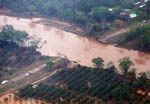
The first named storms of the 2008 hurricane season hit Belize simultaneously, impacting the coastal and southern areas of the country and causing the worst flooding in Belize in 75 years. Tropical Storm Alma developed in the Pacific on 27 May and Tropical Storm Arthur, the first named storm of the Atlantic hurricane season, hit Belize on 31 May.
The confluence of the storms resulted in heavy rains and flooding over a 36 hour period, especially in coastal areas in the southern districts. Villages in the northern and central parts of the country and Belize City, the commercial center, also experienced significant rainfall and flooding. As of mid-June, waters across Belize had receded and access to southern areas was re-established with the aid of temporary bridges.
Five deaths were confirmed and the floods directly affected more than 5300 persons. Most of those evacuated to public shelters have returned to their homes. No significant health events or outbreaks have been reported. The total value of the damage is estimated to exceed US$30 million, of which economic losses to the agricultural sector is estimated at more than US$13 million.
PAHO/WHO helped to complete a rapid needs assessment of water and
sanitation and the Ministry of Health embarked on environmental
health spraying and larvicide distribution. Water was treated in
most areas; however, some areas, primarily in the south, are still
dependent on bottled water. Emergency requests for medicines
and equipment are still pending.
PAHO/WHO is working with the National Emergency Management Organization and the ministry of health to continue public health surveillance. |
Good Reading!
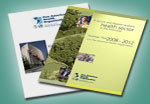
Two new documents are now online at PAHO/WHO’s disaster web site. The first is the Pan American Health Organization’s Strategic Plan for a secure and disaster-resilient health sector, covering the period 2008-12. The second is a discussion paper on global humanitarian trends and their potential impact on the countries of the Americas. This document was discussed at and revised following a high-level consultation in April.
The Strategic Plan for a secure and disaster-resilient
health sector is in line with PAHO’s overarching
Strategic Plan for the same period, which responds to the long-term
Health Agenda for the Americas, a collective call to action and
an instrument to “guide the collective action of national
and international stakeholders who seek to improve the health of
the peoples of this Region.”
The discussion paper on global humanitarian trends
and their potential implications for countries in the Americas was
prepared in response to conversations with regional health authorities.
The topic of disaster management has grown steadily and gained an
increasingly important place on the health agenda of countries in
Latin America and the Caribbean. However, the increasing number
of actors, the improved capacity at local and regional level and
globalization is quickly changing how we deal with risk reduction
and disaster management.
To address this changing environment, PAHO/WHO organized a high-level
consultation to analyze the situation and revise a position paper
written to keep the Region’s ministries of health and other
actors abreast of what may be in store when a major disaster occurs.
The document includes an executive report of the deliberations of
this meeting, a list of participants and the revised discussion
paper.
Both documents can be downloaded at www.paho.org/disasters.
|
