 |
July 2008 |
This is the second issue of Briefly Noted, PAHO/WHO’s short monthly bulletin containing disaster news and notes. Please feel free to share this message with colleagues. To subscribe, send your name, organization and e-mail address to disaster-newsletter@paho.org. Our print newsletter, Disasters: Preparedness and Mitigation in the Americas, will now come out twice a year, allowing time and space for in-depth articles, interviews and other material in support of disaster management. The next issue will be out at the end of September. |
| Preparedness | Safe Hospitals |
Disaster Coordinators Agree to Shared Work AgendaIn early July, PAHO/WHO met with health disaster coordinators from Caribbean Ministries of Health. The 39 participants from 22 countries examined a number of issues including the impact of climate change in Caribbean countries, disease surveillance in disasters, and regional coordination mechanisms for health and pandemic influenza.
The Safe Hospital Initiative in the Caribbean received special attention, specifically the project to strengthen communities through safer health care facilities (supported by the European Commission’s Humanitarian Aid Office (ECHO). This project will reduce the health sector’s vulnerability to natural disasters and strengthen communities by supporting preparedness and safety activities in health care facilities, thus ensuring they can remain operational in disaster situations. The recently prepared wind hazard maps for Caribbean islands and nearby coastal areas of Central and South America, created by PAHO/WHO, were also discussed. Reliable wind hazard information is crucial when it comes to building health (and other) facilities to withstand hurricane-force winds. All 22 countries agreed to implement a shared work agenda over the coming year that focuses on disaster preparedness, mitigation, response and partnerships. The agenda includes activities to review and update national health sector disaster plans, form outbreak containment teams and strengthen the regional emergency response team, conduct at least one simulation exercise, and establish and formalize agreements and partnerships for disaster risk reduction. PAHO/WHO’s technical support will include training, mobilizing resources to support country level disaster risk reduction initiatives and developing the necessary tools, protocols and guidelines. Reducing vulnerability in health care facilities will continue to be one of the main areas of work in the sub-region, in response to the World Disaster Reduction Campaign “Hospitals Safe from Disasters.” The Caribbean health disaster coordinators—specialists in disaster preparedness, mitigation and response from ministries of health in the Region—have met annually since 1995 with PAHO/WHO support. Their meetings provide a forum for consultation and priority setting, allow countries to share experiences, and help strengthen national and regional capacity in emergency preparedness and disaster relief. For more information on their meeting visit http://www.disaster-info.net/carib/hdc2008.htm. |
Peru Contributes to Safe HospitalsThe recovery process in the city of Pisco, Peru—which suffered a devastating earthquake in August 2007—was no small matter. In just a matter of minutes, Pisco lost 95% of its hospital beds. The San Juan de Dios hospital was the city’s main health facility, and it provided health services to a population estimated at 80,000. The hospital partially collapsed, causing the loss of 96 beds in the surgical, obstetrical, general medicine and pediatrics wards. In effect, the facility could not continue to function.
Today, the San Juan Hospital is once again serving the health care needs of the surrounding community, thanks to a fully-equipped temporary health module with 48 patient beds, installed at the site of the demolished wing of the hospital and inaugurated in June 2008. The modern, 560 sq. mt. module --built to be 'safe
from disasters'-- is valued at more than US$250,000, and is a significant
step forward. Since August 2007, the affected population had been
receiving health services in improvised tents. Hospital Rehabilitation The structural safety of health facilities has been a major concern of PAHO/WHO for many years. In 2004, the ministers of health of the Americas approved a resolution at their annual Directing Council meeting on safe hospitals, urging Member States to set the goal of building all new hospitals with a level of protection that guarantees their remaining functional in disaster situations and implementing mitigation measures to reinforce existing health facilities, particularly those providing primary care. The temporary hospital module is the result of careful planning, taking into account aspects such as patient safety and the physical conditions required to provide optimal care. In addition, national norms for the construction of health centers were closely followed. After the hospital debris was removed, special attention was paid to the construction materials used, given soil conditions in the area as revealed through risk maps of the city of Pisco. This ensured that the temporary module was built in a structurally sound manner, meeting anti-seismic standards for health facilities in high-risk areas. Looking forward In the aftermath of the earthquake of August 2007, the only areas of the San Juan de Dios hospital that were able to continue functioning were the emergency services and external consultations. In addition to the 48 beds, the new health module contains an area for minor interventions, and a nursing station. The modern health module will ensure that the population of Pisco continues to enjoy health services during the rehabilitation and reconstruction period, providing a facility that combines the best aspects of a ‘safe hospital.’ |
| Advocacy | |
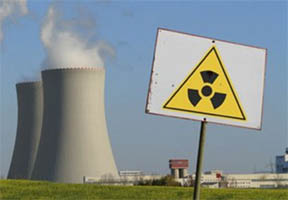
Simulated Nuclear Accident Provides
|
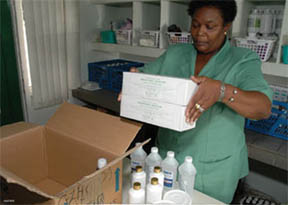
Good practices in international donations: public awareness and advocacy for the media and donor communityAn initiative of PAHO/WHO, OCHA, INTERMON-OXFAM, IFRC, UNICEF, WFP, Fundación Alas, CRID, RED-HUM, with the support of AECID What is the Problem? The arrival of large quantities of humanitarian relief in a disaster-affected country often creates a second disaster due to the difficulty in organizing and managing the supplies. In addition to technical and logistical problems, the situation is further complicated by donations that are inappropriate or arrive too late to meet the real needs of the disaster victims. There are various reasons why this scenario has repeated itself time and again.
A number of important initiatives already address these issues, developed by the international community (donors, development agencies and NGOs). Best practices as well as clear examples of what doesn’t work have been published, including:
Although consensus on principles and standards already exists, it not be sufficiently well known or the standards uniformly applied. What will this project do? This is a complex problem with no single or global solution. Solving it will require improving awareness and changing attitudes and behaviors through repeated dissemination of the principles and good practices as well as lobbying and advocacy efforts. Therefore, this initiative will contribute technical information designed to influence the media and the key actors who intervene in these scenarios: donors and authorities in disaster-affected countries. This is a pilot initiative that focuses on three target groups in a select number of countries: (1) national and international media, (2) embassies in donor countries and international organizations and (3) authorities in countries receiving aid, primarily ministries of foreign affairs, civil defense, ministries of health and others. The purpose is not to establish regulations or international standards, but to promote and disseminate practical guidelines to update or improve existing national guidelines and standards in this field. Under this project, we will:
Most of the dissemination of information and communication will take place electronically, via the Internet, through e-mail and on web pages, using new technologies and spaces available as people socialize or interact with each other throughout the web (through video and multimedia, You-Tube and similar pages). Materials and messages will be developed taking into account already existing the progress, agreements, or international principles, but with a practical, didactic and operational slant. The pilot campaign is slated to last until October 2008. Partners The issue of good donations is an issue common to a number of agencies
and countries. It is recurrent and widespread in many emergencies
and therefore requires an interagency, multidiscisplinary and participatory
approach. To contribute to solving this problem, an interagency
group was formed that shares the approach and the basic objectives
of the campaign. Currently, the group ismade up of PAHO/WHO, INTERMON/OXFAM,
PADRU/IFRC, IFRC, OCHA, UNICEF, WFP, CRID, The Communication Initiative
and the Alas Foundation, with the support of AECID. |

Pan American Health Organization Area on Emergency Preparedness and Disaster Relief For more information, visit our website at www.paho.org/disasters |